Daily Pet Care Checklist for Dogs and Cats
Make Everyday Care Easier to Remember
It offers a way to organize daily care without having to keep every task in your head.
A shared routine is especially useful when several people help. You can decide who handles breakfast, walks, litter-box cleaning, or evening play, then mark tasks as they’re done. That can help prevent a missed meal or a well-meaning duplicate feeding.
Consistency also makes changes easier to spot. If your cat usually rushes to breakfast but begins leaving food untouched, or your dog seems less interested in a favorite walk, make a note and monitor the situation. A checklist is a reminder, not a substitute for veterinary advice.
Build a Routine Around Your Pet
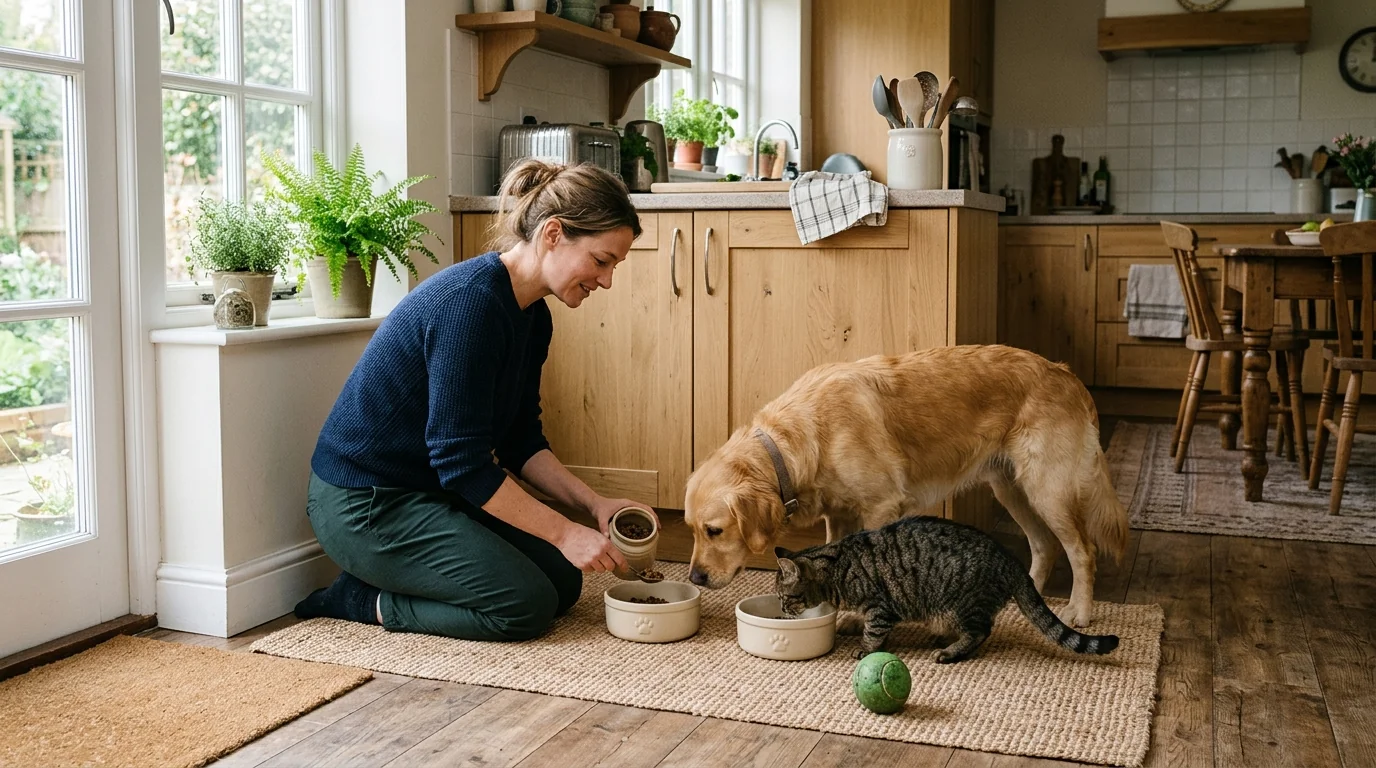
Start with meals at consistent times and access to fresh water. Choose food and portions suited to your pet, and ask your veterinarian for guidance when you’re unsure. Add appropriate exercise or play and a clean, comfortable resting area.
Activity and grooming needs vary by species, age, coat, health and temperament. An older dog may need gentler walks than an energetic adult, while cats may enjoy short play sessions or opportunities to climb.
- Dogs: Plan suitable walks and play, and check the coat and paws. Groom as needed.
- Cats: Offer interactive play, scoop the litter box and groom as needed.
- Both: Notice changes in appetite, energy and behavior. For cats, also watch for changes in litter-box habits.
These are general care ideas, not a description of the printable’s exact contents. Keep grooming comfortable and gradual.
Keep Tails Wagging and Whiskers Happy | Printable Daily Care Routine for Pets Checklist | Digital Download for Dog & Cat Owners | Pet Wellness & Grooming Guide
View product
Pay Attention to Body Language
A wagging tail does not automatically mean a dog is happy. Look at the whole dog and the situation: a loose posture and relaxed face can suggest comfort, while a stiff body or tense expression calls for caution.
For cats, consider posture, ears, eyes and tail movement. If your cat pulls away or flattens its ears, give it space. Let your pet choose whether to engage rather than forcing contact.
Contact your veterinarian about persistent or concerning changes in appetite, energy, behavior or litter-box habits. Your notes can help describe what you’ve noticed, but a checklist cannot diagnose the cause.
Put Your Printable to Work
Our Keep Tails Wagging and Whiskers Happy checklist is a digital download you can print and keep near your pet-care supplies. Agree on who will handle each task and mark it when finished. Update your plan when schedules or your pet’s needs change.
Keep separate notes about patterns you want to discuss with your veterinarian. If you enjoy written reflection, our AI Prompts to Supercharge Your Journaling download is another option for your own daily journaling; it is not a pet-care guide.
Before choosing, compare the product details with your daily routine, available space, care needs, and preferred setup. The strongest option is usually the one that fits the intended use clearly and remains simple to clean, store, and check before repeat use.
It is also worth checking measurements, material notes, included parts, and compatibility details so the item matches the way it will be used after delivery.
FAQ
What does tail wagging mean in slang?
In slang, tail wagging can describe an eager, enthusiastic, or submissive response, often by comparing someone to an excited dog. The intended meaning depends on context.
What are 5 signs your dog loves you tell me more about dog body language?
Possible signs include relaxed body language, seeking proximity, friendly greetings, choosing to play, and resting comfortably nearby. Dogs express trust and affection differently, so consider your dog’s usual behavior and the situation.
What is the meaning of tail wagging?
Tail wagging is a form of communication that can signal engagement or arousal rather than one specific emotion. Read it alongside the animal’s other body language and the context.
See if Keep Tails Wagging and Whiskers Happy | Printable Daily Care Routine for Pets Checklist | Digital Download for Dog & Cat Owners | Pet Wellness & Grooming Guide fits your setup
View product










Leave a comment